
In the first five months, Shanghai Port exported robots worth 8.36 billion yuan, ranking first in the country in terms of scale
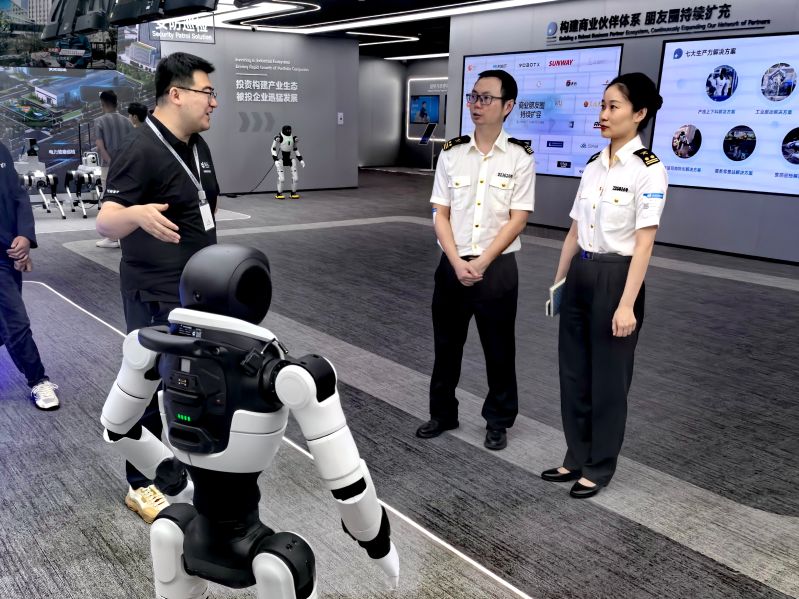
Since the beginning of this year, the high-end manufacturing industry cluster in Shanghai has become a strong support for foreign trade growth, with particularly impressive performance in the export of robot categories. According to statistics from Shanghai Customs, in the first five months of this year, the export value of various separately listed robots at Shanghai Port reached 8.36 billion yuan, exported to 113 countries and regions around the world, accounting for over 40% of the total export value of robots in China, ranking first in the country.
Specifically, cleaning robots represented by floor sweeping robots have become the main export force with mature technological advantages and clear application scenarios. In the first five months, the total export value was 6.11 billion yuan, accounting for 71.6% of the total export value of robots at Shanghai Port. The export of industrial robots has also continued the momentum of rapid growth last year, with exports of 2.13 billion yuan in the first five months, a year-on-year increase of 39.5%. It has successfully entered the traditional industrial robot market in Germany, Japan and other countries, with exports to Germany and Japan increasing by 84% and 36.5% respectively in the first five months.
The rapid growth of robot exports is also driven by the precise efforts of tax policy research. The eight digit tax number is the exclusive "ID card" for import and export goods, and the policy requirements for import and export will vary depending on the tax number. Previously, the classification of robots in the "Import and Export Tariff" was relatively macro, with industrial robots as the main category. The differences in cognition and law enforcement among different countries and regions have brought significant compliance risks and operating costs to export enterprises.
The Tax Administration Bureau of the General Administration of Customs (Shanghai) conducted on-site research in response to industry development demands and proposed multiple tax policy suggestions to the State Council Tariff Commission, such as adding tax numbers for "intelligent bionic robots" and "clean robots", which were adopted and implemented in the "2026 Tariff Adjustment Plan". Since January 1 of this year, the import and export of intelligent bionic robots has possessed the exclusive "ID card" number - tax code number 8479.8970, and the cleaning robots are 8508.1110 and 8508.1910.
In order to help enterprises accurately grasp the latest import and export tax policies, the Tax Administration Bureau of the General Administration of Customs (Shanghai) has launched policy promotion for the newly added tax numbers in 2026, refined the classification standards for various robots, interpreted the newly added tax numbers through WeChat posts, enterprise lectures, and other methods, guided enterprises to apply for compliance from the source, and improved the overall compliance level of the industry.
Zhao Junhui, the logistics manager of Ecovacs, said, "The refinement of tax codes has effectively improved the accuracy of product classification, greatly simplified customs clearance processes, significantly improved trade facilitation levels, and opened up efficient channels for enterprises to go global. This year, Ecovacs' export orders increased by more than 50% year-on-year, and traditional markets such as Europe and North America have strong demand. The popularization of smart homes has driven the continuous release of overseas consumption. Relying on global channels and high-end product advantages, the enterprise's market share has steadily increased, demonstrating the strong momentum of China's robot foreign trade