
The 'Ice Silk Road' sets sail again. Tianjin Port officially opens the 2026 Arctic route navigation cycle (see picture)
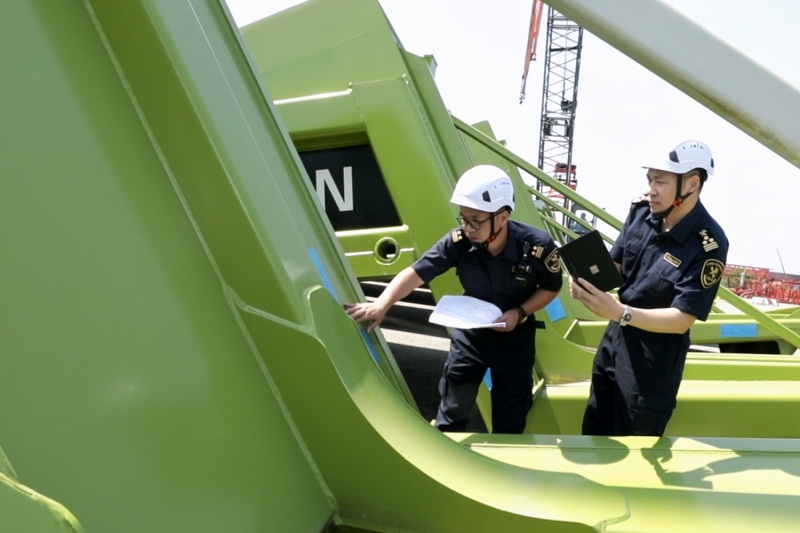
The picture shows customs officers conducting on-site inspection of the first Arctic route cargo of the year. Photo by Peng Xiaoyi
On June 22nd, in the Dagukou Port Area of Tianjin, the bulk carrier "Shimeida" successfully completed customs clearance procedures and loaded large industrial equipment such as steel structures produced in the Beijing Tianjin Hebei region to the ports along the Baltic Sea, embarking on the first voyage of this year's Arctic route. This marks the official start of the Arctic route navigation cycle for Tianjin Port in 2026.
The Arctic route relies on the northeast channel of the Arctic. As the core shipping channel of the "Ice Silk Road" under the framework of the joint construction of the "the Belt and Road", it is the shortest sea route connecting East Asia with northern Europe and the Arctic coastal areas, which is about one-third shorter than the traditional ocean routes via the Suez Canal and the Mediterranean Sea. This waterway is located in the high latitude waters of the Arctic, and is limited by seasonal ice conditions, with a limited navigation window period. It only has navigation conditions from June to October every year. With the advantages of stable timeliness and controllable comprehensive costs, it has become an important supplementary logistics channel for the export of large industrial equipment from the Beijing Tianjin Hebei region.
In recent years, the import and export cargo volume of the Arctic route at Tianjin Port has continued to rise. Xiao Renjie, the head of the Comprehensive Business Department of Tianjin Lingang Customs, introduced: "Last year, we supervised a total of 520000 tons of import and export goods on the Arctic route, an increase of nearly four times compared to the previous year. From the current booking and stocking situation, this year's basic class is fully loaded for shipment, and the annual freight volume will continue to maintain a significant growth trend
At the same time as the rapid growth of cargo volume, the special attributes of the route also put forward higher requirements for customs clearance guarantee. The Arctic shipping route only has a 3-4 month navigation window period throughout the year, with highly concentrated ship schedules and limited fault tolerance space. In addition, the large size of large equipment and high transportation costs also contribute to this.
Tianjin Lingang Customs will move the customs declaration and review process forward as a whole, docking the cargo manifest of each cargo ship in advance, completing the pre verification of declaration information before the ship arrives at the port, and directly entering the inspection and release process after the goods arrive at the port, greatly reducing the waiting time on site. At the same time, the "ship side inspection" mode will be implemented throughout the voyage, and large equipment will be inspected directly at the loading site after arriving at the port, eliminating the need for secondary reshipment and relieving the pressure of turnover in the terminal yard during the centralized shipment period. A dedicated support team for the Arctic route will be provided to dynamically allocate inspection forces to ensure that goods are inspected upon arrival and ships depart on schedule. (Peng Xiaoyi/Text)