
Qingdao Jiaodong Airport Customs seized 27 cultural relics prohibited from leaving the country (pictured)
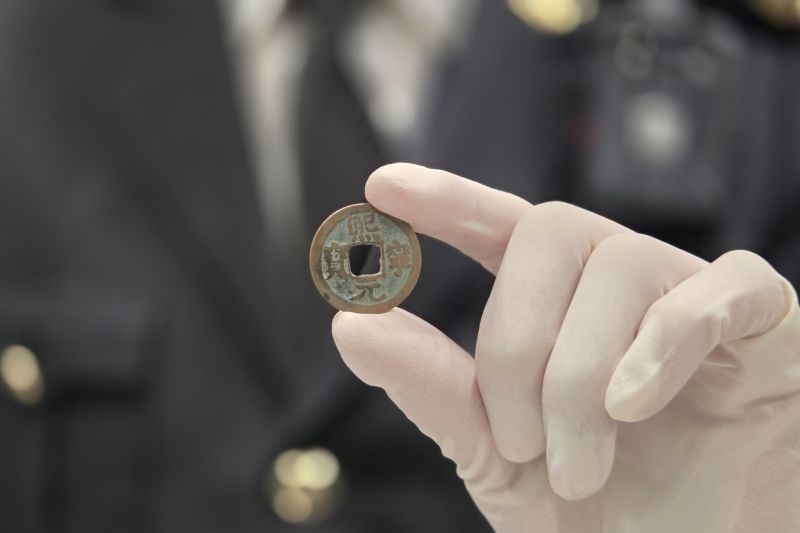
The picture shows Li Xinyao, a cultural relic seized by the customs at Qingdao Jiaodong Airport
Recently, the customs at Qingdao Jiaodong Airport seized 27 prohibited cultural relics carried by passengers.
During the supervision of outbound passengers and luggage, customs officers discovered that a passenger who had left the country through a "no declaration channel" had abnormal machine inspection images of items in his backpack, including multiple circular hollow objects arranged neatly, suspected to be coins. He was immediately intercepted and inspected. After opening the bag for inspection, customs officers found an ancient coin collection book in his backpack, which neatly arranged multiple coins with green copper rust on the surface, suspected to be cultural relics. After identification, the above-mentioned items were 3 Tang Dynasty ancient coins, 17 Song Dynasty ancient coins, and 7 Qing Dynasty ancient coins, totaling 27, all of which are general cultural relics prohibited from leaving the country.
According to the Cultural Relics Protection Law of the People's Republic of China, the export of cultural relics shall be reviewed by the cultural relics import and export review institution designated by the cultural relics administrative department of the State Council. Cultural relics that have been approved for export after review shall be issued a cultural relics export permit by the cultural relics administrative department of the State Council, and shall be exported from the port designated by the cultural relics administrative department of the State Council. Any unit or individual transporting, mailing, or carrying cultural relics out of the country shall declare to the customs, and the customs shall release them with the cultural relics exit permit. If smuggling cultural relics constitutes a crime, criminal responsibility shall be pursued in accordance with the law; If the act constitutes smuggling but does not constitute a crime, the customs shall impose penalties in accordance with relevant laws and administrative regulations. (Geng Kai/Wen)