
The momentum of "going global" is strong. In the first quarter, the export volume and quality of domestically produced new energy vehicles at Shanghai port have both increased
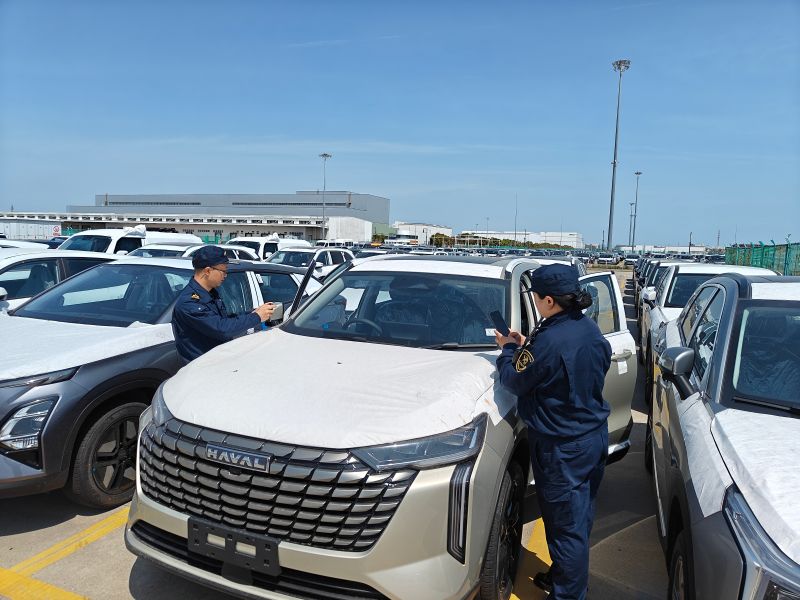
In the first quarter of this year, the export of domestically produced new energy vehicles at Shanghai Port had a good start. As the largest automobile export port in China, Shanghai relies on the dual wheel drive of Waigaoqiao Port Area and Nangang Port in Lingang New Area, combined with customs facilitation measures, to promote domestic new energy vehicles to reach the global market at a faster speed. Among them, the Shanghai Waigaoqiao Port Area under the supervision of Shanghai Customs exported 386000 vehicles, a year-on-year increase of 15.9%, and the proportion of new energy vehicles was as high as 68.5%. At the same time, Shanghai Nangang Port, as an emerging growth pole, also performed well. In the first quarter, Shanghai Nangang completed the export of 207000 vehicles for foreign trade, a year-on-year increase of 111%. Among them, 138000 new energy vehicles were exported, a year-on-year increase of 176%.
The growth trend of automobile exports is particularly evident in the daily operations of ports. Located in Waigaoqiao Port Area, Haitong International Automobile Terminal is currently the largest single vehicle roll on/roll off terminal in China, with an average daily shipment of over 4000 vehicles and a shipment volume of nearly 150000 vehicles in March. In the Lingang New Area, the daily average operating volume of Shanghai Nangang Port has remained stable at around 3000 vehicles recently, and during peak periods, it can exceed 5000 vehicles per day. On March 21st, the "LIBERTY PROMISE" ship carrying 4270 domestically produced cars set sail from Shanghai Nangang Port to Belgium; On March 31st, the daily planned operation volume of Haitong Port also reached 5522 vehicles, with multiple domestic and foreign trade ships operating intensively here.
With the gradual strengthening of the role of Shanghai Port as a hub for automobile exports, the automobile shipping network radiating from Shanghai to the Yangtze River Delta and even the Yangtze River Basin is also becoming increasingly dense. Taking Waigaoqiao Port as an example, on March 31st, not only domestic trade ships from Taicang, Anqing, Wuhan and other places transited and consolidated here, but also five foreign trade ships loaded their vehicles and headed to Brazil, South Africa and other regions.
Tao Wei, the manager of Shanghai Huanji International Freight Forwarding Co., Ltd., was coordinating a batch of Great Wall Motors to South Africa on site that day. He said, "South Africa is China's largest trading partner in Africa, and the Great Wall brand ranks among the top local brands. We actively explore overseas markets, and with the addition of other global markets, we export approximately 27000 vehicles per month. This confirms that the recognition of Chinese car brands internationally is continuously increasing.
Faced with the rapidly growing demand for customs clearance of exported vehicles, Shanghai Customs has taken the initiative to pave the "fast lane" for automobile exports through institutional innovation and technological empowerment. He Yi, Deputy Director of the Inspection Department of the Customs in Waigaoqiao Port Area, Shanghai, introduced that the Customs actively implements the achievements of the China South Africa Economic and Trade Cooperation Forum, has specially opened a green window for customs clearance inspection of automobile exports, implemented dedicated personnel to connect with ports and enterprises, and real-time grasp of export plans and shipping schedules, providing "5+2" and "7 × 24 hours" appointment clearance services. At the same time, we will comprehensively promote paperless operations, combine convenient measures such as "advance declaration" and "arrival inspection and release", use big data analysis and risk assessment to optimize inspection processes, and accelerate and increase efficiency in automobile customs clearance.
In the Lingang New Area, Yangshan Customs focuses on intelligent supervision and significantly reduces non operational waiting time by optimizing checkpoint inspection and release logic; Create a fully visualized supervision system for the entire process, embed the "seamless" supervision process into the logistics chain, and provide professional, high-quality, and efficient services to promote the improvement of the quality, cost reduction, and efficiency of the new energy vehicle export chain.
Yu Tianle, Director of the Lingang Port Operations Department of Haitong Company, stated that thanks to the timely commissioning of the newly built berths in Shanghai Nangang Phase II after passing customs inspection, as well as the strong momentum of domestic cars going abroad, the export volume of Nangang is expected to exceed 600000 vehicles for the whole year of 2026, setting a new historical high.