
The first case in the country! Tax reduction and research equipment cross-border flow supervision landing in Nansha
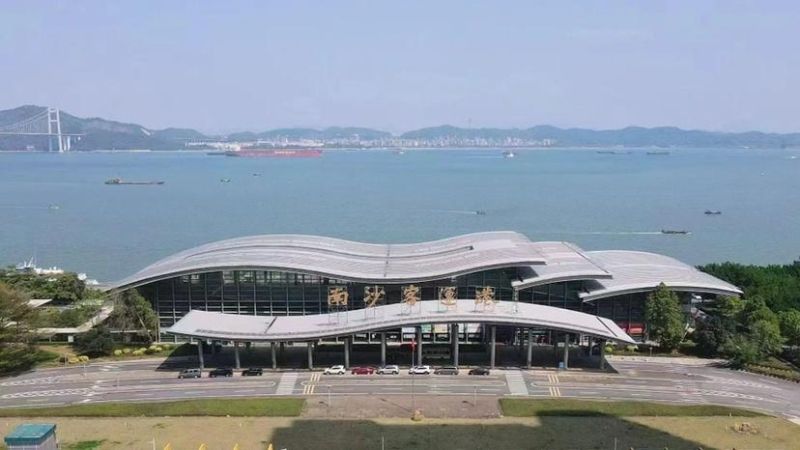
Recently, under the supervision of Nansha Customs under Guangzhou Customs, a set of multi parameter water quality analyzers from the Hong Kong University of Science and Technology (Guangzhou) was successfully exported through the travel inspection channel of Nansha Passenger Port, and carried by individual researchers on a ship to Hong Kong for research on marine ecology in the Guangdong Hong Kong Macao Greater Bay Area.
This is the first attempt in the country to regulate the cross-border flow of research equipment for tax reduction and exemption, demonstrating the leading role of Nansha Free Trade Zone as an experimental field for institutional innovation. By taking the lead in breaking through the bottlenecks of cross-border flow of scientific research factors, it promotes cross-border factor flow and innovation cooperation among Guangdong, Hong Kong, and Macao, and provides a replicable and promotable "Nansha experience" for the national level to improve the regulatory policies for cross-border flow of research equipment.
The research team from the Hong Kong University of Science and Technology (Guangzhou) is conducting a study on the regional Earth system for sustainable development of the Guangdong Hong Kong Macao Greater Bay Area under climate change in Hong Kong. Real time hydrological observations are required in the Dapeng Bay area of Hong Kong, and the core equipment used for the study is tax reduction and exemption equipment during the customs supervision period. Due to the demands of scientific research work, equipment needs to frequently cross borders. According to traditional management methods, the approval process and usage location restrictions are difficult to match the requirements of scientific research projects for timeliness and flexibility in mobility.
In response to this, Nansha Customs took the initiative to meet the needs of universities, formed a special service team, optimized tax service measures in accordance with the General Administration of Customs, simplified regulatory processes, and explored the implementation of the "one-time application, project wide" filing model. The research team only needs to declare a single project once, and can flexibly allocate equipment across borders during the research cycle, and provide quarterly feedback to customs on usage according to regulations. At the same time, customs has opened up specialized green channels to achieve synchronous improvement of regulatory efficiency and scientific research efficiency through dynamic supervision.
In response to the high requirements of transportation safety and customs clearance time for multi parameter water quality analyzers, Nansha Customs and the school have conducted multiple assessments and collaborated to determine a customized customs clearance plan of "personal carrying+ship transportation". Researchers completed rapid inspection and release through the Nansha Port inspection channel, and the equipment was transported directly to Hong Kong with the ship. This not only meets the demand for portable transportation of precision instruments, but also ensures stable transportation processes, achieving "zero delay" in customs clearance. It helps promote scientific research cooperation and innovation breakthroughs among Guangdong, Hong Kong, and Macao, accelerate the flow of resources and the connection of rules among the three regions, and drive the integration of the Greater Bay Area through technological cooperation.
The innovative tax reduction and exemption research equipment cross-border supervision model of Nansha Customs is the first successful practice in the country, which has profound significance for the construction of Nansha Free Trade Zone. This model enhances the convenience of cross-border collaboration among researchers from Guangdong, Hong Kong, and Macao, injecting strong impetus into attracting more high-end scientific research resources from Hong Kong, Macao, and internationally to Nansha, and building a core carrier area for the comprehensive national science center in the Greater Bay Area; Enriching the connotation of the institutional opening-up of the free trade zone, valuable experience has been accumulated for Nansha to further connect with international high standard economic and trade rules, optimize cross-border science and technology innovation service ecology, and effectively support its development into a major strategic platform based in the bay area, coordinated with Hong Kong and Macao, and facing the world. Next, Nansha Free Trade Zone will take this as an opportunity to continuously deepen institutional integration and innovation.